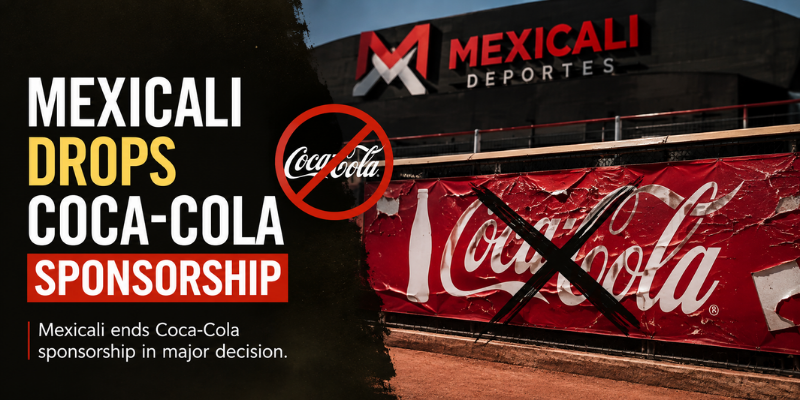
Mexicali drops Coca-Cola sponsorship became a widely discussed story after the city decided not to authorize the traditional Coca-Cola Christmas caravan for the 2025 holiday season. The decision came amid federal guidance concerning the promotion of sugary drinks at public events where children are a major audience.
Rather than canceling its holiday celebrations altogether, Mexicali chose to organize its own Christmas parade. The change raised questions about public health, corporate sponsorship, advertising and the future of long-standing community traditions.
For residents, the issue was about more than a familiar brand disappearing from a parade. It highlighted how cities are balancing entertainment and tradition with evolving health policies.
Why Mexicali Dropped Coca-Cola Sponsorship
The decision was closely connected to concerns over the promotion of sugar-sweetened beverages during family-oriented public events. According to local reporting, Mexicali officials responded to a request from Mexico’s federal government to avoid events sponsored by soft-drink companies when children are the primary audience.
The traditional Coca-Cola Christmas caravan had become a recognizable seasonal attraction. Its decorated trucks, lights and holiday presentation were strongly associated with Coca-Cola branding.
However, the municipal government determined that the city could preserve the festive experience without continuing the same commercial arrangement.
Public Health Concerns Behind the Coca-Cola Decision
Mexico has spent years addressing concerns surrounding excessive sugar consumption, obesity and related health problems. That broader public-health environment helps explain why sugary-drink advertising at children’s events has received additional scrutiny.
The Mexicali decision therefore fits into a larger conversation about how public institutions should approach commercial partnerships. When a public event is primarily designed for families and children, officials may face pressure to limit promotional activities involving products that health authorities are encouraging people to consume less frequently.
This does not mean that Coca-Cola products were banned in Mexicali. The issue concerned sponsorship and promotion surrounding a particular public holiday event.
Coca-Cola Christmas Caravan Cancelled in Mexicali
The most significant practical change was the absence of the traditional Coca-Cola caravan during the 2025 holiday season.
Local reporting said the municipal government did not authorize the event and that Coca-Cola declined to proceed after reviewing federal recommendations and their potential impact.
That distinction matters because the phrase “Mexicali drops Coca-Cola sponsorship” can make it sound like the city terminated a broad commercial relationship with Coca-Cola. Available reporting instead points to a specific holiday event and its sponsorship arrangements.
The city subsequently announced an alternative celebration designed to maintain the holiday atmosphere while avoiding commercial sponsorship from the soft-drink company.
Mexicali Creates Its Own Christmas Parade
Rather than allowing the controversy to overshadow the holiday season, municipal officials planned a city-organized Christmas parade for December 18, 2025.
The parade was scheduled to travel from the UABC vice-rectorate area through major city streets before reaching the Christmas village at FEX. Officials said the event would include floats, music, government departments and family-oriented spaces.
This approach allowed Mexicali to retain the community aspect of the celebration while changing the branding model.
That may ultimately be the most important part of the story: the city did not have to choose between public-health considerations and holiday traditions.
What the Coca-Cola Sponsorship Change Means for Families
For many families, the Coca-Cola caravan was primarily an entertainment experience rather than a marketing campaign. Its lights, music, trucks and holiday atmosphere had become part of the seasonal routine.
Removing the Coca-Cola branding therefore represented a noticeable cultural change.
At the same time, the new arrangement demonstrated that community celebrations can continue without depending on a major multinational sponsor. Local governments can work with cultural groups, artists, businesses and community organizations to create events that feel distinctly local.
A Shift From Brand-Led to Community-Led Celebrations
One possible long-term consequence is a greater emphasis on community-led festivities.
When a large corporation sponsors an event, it can provide significant financial resources, logistical assistance and promotional reach. But the sponsor also receives substantial visibility in return.
A city-organized event reverses that relationship. Instead of placing a corporate brand at the center of the celebration, organizers can emphasize local identity, public spaces and community participation.
Mexicali’s approach offers an example of how municipalities might redesign traditional events while keeping their core purpose intact.
Coca-Cola Sponsorship and the Bigger Public Health Debate
The Mexicali case also reflects a broader debate about marketing sugary drinks to children.
Public-health advocates have argued that children can be particularly susceptible to branding because advertising often connects products with excitement, friendship, holidays and memorable experiences. A Christmas caravan can therefore function as more than simple entertainment when a recognizable beverage brand is at its center.
Mexico’s federal health messaging has increasingly encouraged officials to consider these issues when planning events aimed at children. Reports about the Mexicali decision specifically connected the cancellation to this policy environment.
At the same time, businesses and sponsors can argue that corporate partnerships help communities fund and organize major public events.
That tension is unlikely to disappear. Instead, cities may increasingly need clear sponsorship rules that balance commercial interests with public-health objectives.
What This Means for Future Holiday Events in Mexico
The Mexicali example could encourage other municipalities to reconsider how corporate sponsorship works at children’s events.
This does not necessarily mean Coca-Cola or other beverage companies will disappear from Mexican community life. Coca-Cola remains active in Mexico, including promotional activity involving Mexicali through its bottling network. For example, Coca-Cola’s own 2026 FIFA World Cup promotion lists Mexicali among the territories served by Arca.
The distinction is important: ending or avoiding sponsorship of a specific public event is very different from ending a company’s commercial presence in a city.
Future events could instead rely on combinations of local businesses, cultural organizations, municipal funding and sponsors whose products or services align more closely with the event’s objectives.
Will Other Cities Follow Mexicali?
Possibly, although each municipality will make its own decisions.
The Coca-Cola holiday caravan continued in some other Mexican cities during the 2025 season, showing that the response was not uniform nationwide.
That suggests Mexico is currently navigating a transition rather than following one single national model.
Some cities may prioritize established traditions and commercial partnerships, while others may adopt stricter health-focused approaches.
FAQs About Mexicali Drops Coca-Cola Sponsorship
Why did Mexicali drop Coca-Cola sponsorship?
Mexicali decided not to authorize the traditional Coca-Cola Christmas caravan amid federal health guidance discouraging the promotion of sugary drinks at events primarily attended by children. Coca-Cola reportedly declined the activity after reviewing the guidance.
Did Mexicali ban Coca-Cola products?
No. The decision was about the sponsorship and promotion of the Coca-Cola Christmas caravan, not a general ban on Coca-Cola products in Mexicali. Coca-Cola continues to have commercial operations and promotional activity in the region.
What replaced the Coca-Cola Christmas caravan in Mexicali?
The city organized its own Christmas parade for December 18, 2025. The planned event included floats, music, municipal participation and a Christmas village at FEX.
Why is the Mexicali Coca-Cola decision important?
The decision highlights a growing debate over public health, children’s exposure to sugary-drink marketing and the role of corporate sponsorship in public celebrations. It also demonstrates that cities can preserve cultural traditions while changing their sponsorship models.
Will Coca-Cola stop sponsoring events across Mexico?
There is no evidence that Coca-Cola is ending all event sponsorships across Mexico. Reports indicated that the company continued sponsoring holiday celebrations in several other cities during the same season.
Conclusion
The story of Mexicali drops Coca-Cola sponsorship is ultimately about more than one Christmas parade. It reflects a changing conversation around public health, children’s events, corporate branding and community traditions.
Mexicali chose to preserve its holiday celebrations while moving away from the traditional Coca-Cola-sponsored format. The city’s alternative parade showed that removing a major commercial sponsor does not necessarily mean removing the celebration itself.
As public-health policies continue to evolve, more communities may face similar decisions. The lasting takeaway is simple: traditions can survive, even when the brands associated with them change.
Stay in touch to get more updates & alerts on site techeeradar.com! Thank you