
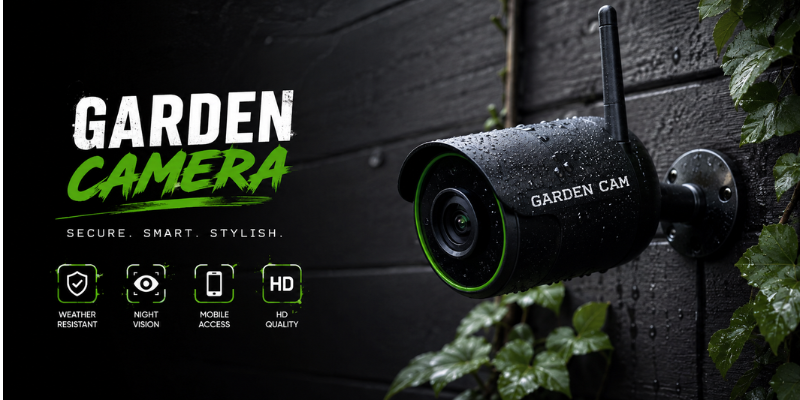
A garden camera can do much more than record what happens outside your home. It can help you keep an eye on pets, monitor plants and outdoor areas, check deliveries, and spot unusual activity after dark. Modern outdoor cameras can offer features such as motion detection, night vision, two-way audio, and remote viewing.
The right setup depends on what you actually want to watch. A small backyard may need only one wide-angle camera, while a larger garden could benefit from multiple viewing points.
Placement matters just as much as camera specifications. A good position can improve image quality, reduce glare, and give you a more useful view of the area you want to monitor.
What Is a Garden Camera?
A garden camera is an outdoor security camera designed to monitor areas such as backyards, patios, lawns, sheds, garages, side entrances, and garden paths.
Unlike a basic indoor camera, an outdoor model should be designed to handle changing weather and outdoor conditions. Depending on the model, weather-resistance ratings can range from IP54 to IP67, so checking the manufacturer’s exact rating is important rather than assuming every outdoor camera is waterproof.
Some cameras use Wi-Fi, while others connect through Ethernet, cellular networks, or other wireless technologies. Battery and solar-powered options can also make installation easier where running a power cable is inconvenient.
Outdoor Security Camera vs Indoor Camera
Using an indoor camera through a window may seem like an inexpensive solution, but it can create reflections and interfere with motion detection. Google recommends using an outdoor camera when the goal is to monitor an outdoor space.
An outdoor model is generally the more practical choice because it is designed for exposure to conditions that an indoor device may not tolerate.
Important Garden Security Camera Features
Not every camera needs the same features. The best choice depends on the size of your garden, lighting conditions, internet connection, and what you want to monitor.
Night Vision for Backyard Monitoring
Night vision is particularly useful because gardens can become difficult to see once natural light disappears. Infrared night vision can illuminate subjects without requiring visible lighting.
However, placement can affect nighttime performance. Nearby walls, plants, fences, or other surfaces can reflect infrared light back toward the lens and reduce the quality of the image.
Some newer outdoor cameras also offer color night vision, often using built-in spotlights. This can provide more visual detail in darkness, although it may use additional power and introduce visible lighting into the garden.
Motion Detection and Smart Alerts
Motion detection allows the camera to respond when activity occurs. Depending on the model, smart detection may distinguish between people, vehicles, animals, or general movement.
This can be especially helpful in a garden because leaves, branches, insects, and changing shadows can otherwise create unnecessary alerts. Some current cameras offer person, vehicle, and animal detection to make notifications more useful.
If your main concern is someone entering the garden, look for adjustable detection zones and sensitivity settings. These can help reduce alerts caused by areas you do not need to monitor.
Choosing the Right Garden Camera Setup
The best camera is not necessarily the one with the highest resolution. Think about the area first.
For a small garden, a wide field of view may be enough to cover a patio, lawn, and nearby entrance. Larger spaces may require two or more cameras to avoid blind spots.
Camera placement also affects detail. Google recommends positioning outdoor cameras in shaded locations where possible and avoiding direct sunlight or strong lights shining into the lens.
Wired, Wireless, Battery, or Solar Cameras
A wired camera can be a strong choice when you want continuous power and do not mind running cables. Wired Ethernet models can also provide a reliable network connection.
Battery-powered cameras are easier to install because they do not require a permanent power cable. However, battery life depends on factors such as activity, settings, temperature, and how frequently the camera records.
Solar-powered models can reduce the need for regular charging when the installation receives enough sunlight. Current outdoor camera ranges include wired, battery, and solar-powered options, giving homeowners several installation choices.
Garden Camera Placement Tips
A camera can have excellent specifications and still produce disappointing footage if it is installed in the wrong location.
Start by identifying the area that matters most. This might be a garden gate, shed, patio, driveway, or pathway leading toward the house.
Mount the camera high enough to discourage easy interference, but not so high that faces and other important details become difficult to see.
Avoid pointing the lens directly toward the sun. Strong daylight can cause glare and reduce image quality. At night, nearby floodlights can create a similar problem. Adjusting the camera downward can sometimes reduce unwanted glare.
Trim or reposition vegetation if branches constantly move across the camera’s field of view. A simple change in the surrounding environment can sometimes improve motion detection more than changing the camera itself.
Protecting Your Outdoor Camera
Even weather-resistant equipment needs sensible placement. A sheltered position under an eave can reduce direct exposure to harsh sunlight and weather while still providing a useful viewing angle.
Always follow the manufacturer’s mounting instructions and check the device’s stated operating conditions. Weather resistance is not necessarily permanent; exposure, wear, damage, repairs, and aging can affect protection over time.
Storage, Remote Viewing, and Privacy
Before buying an outdoor camera, decide where recordings will be stored. Depending on the model, options may include a microSD card, network video recorder, cloud storage, or a combination of these.
Local storage can be attractive if you want greater control over recordings. Cloud storage can make remote access and backup more convenient, but it may involve subscription fees depending on the manufacturer.
Remote viewing is another useful feature. With a compatible camera and app, you can check the live feed while away from home. Some models also provide push notifications when motion or specific types of activity are detected.
Privacy deserves equal attention. Avoid pointing cameras unnecessarily toward neighbors’ private spaces or areas where people reasonably expect privacy. Laws concerning recording and identifying people vary by location, so check the rules that apply where you live. Google likewise advises camera owners to consider applicable privacy and data-protection requirements.
Is a Garden Camera Worth It?
For many households, an outdoor security camera can provide useful visibility without requiring someone to constantly check the garden.
It can help you see what triggered a noise, check whether a pet has gone outside, monitor a shed or gate, and receive an alert when unexpected activity occurs.
The key is choosing equipment based on the actual environment. A camera with excellent specifications is not particularly useful if its lens faces the sun, its wireless signal is unreliable, or its field of view misses the area you care about.
A simple, correctly positioned camera can often be more useful than an expensive system installed without much planning.
FAQs About Garden Cameras
What should I look for in a garden camera?
Focus on weather resistance, image quality, night vision, motion detection, field of view, connectivity, storage, and power requirements. Your garden’s size and lighting should determine which features matter most.
Can an outdoor camera see clearly at night?
Yes, many outdoor cameras use infrared night vision, while some models use visible lighting to provide color footage after dark. Performance depends on the camera, distance, surrounding objects, and lighting conditions.
Is Wi-Fi reliable enough for outdoor security cameras?
It can be, provided the camera receives a sufficiently strong and stable signal. If the garden is far from the router, a wired Ethernet connection, suitable access point, or cellular camera may be worth considering.
Where should I position an outdoor security camera?
Choose a position that gives a clear view of the area you want to monitor while avoiding direct sunlight and strong artificial lights. Keeping the camera somewhat sheltered can also help protect it from harsh outdoor conditions.
Do garden cameras record continuously?
Some models support continuous recording, while others primarily record when motion is detected. Battery-powered cameras often use event-based recording to conserve energy, whereas wired systems are generally better suited to continuous recording.
Conclusion
A garden camera can make outdoor monitoring simpler by combining live viewing, motion alerts, night vision, and flexible storage options. The right model depends on the area you need to cover and how you plan to power and access it.
Good placement is just as important as camera quality. Avoid glare, protect the equipment from harsh conditions, and aim the lens toward the areas that genuinely matter.
Most importantly, remember privacy when positioning any outdoor security device. A thoughtful setup can provide useful protection without unnecessarily intruding on other people’s private spaces.
Final Line
Stay in touch to get more updates & alerts on site techeeradar.com ! Thank you